Almost all skin colors from around the world can be seen on the streets of New York. This diversity is also reflected in the consultation rooms of medical aesthetics clinics, but a frequently underestimated fact is: different skin colors have very different reactions to photonic projects. Choosing the wrong parameters or equipment could mean compromised results or even risks of anti-darkening or depigmentation.
In the field of dermatology and medical aesthetics, Fitzpatrick skin typing is usually used to assess skin's response to light. In simple terms, Types I to III have fair skin that is more prone to sunburn but less likely to tan, with relatively low melanocyte activity. Types IV to VI have olive to dark skin tones, where melanocytes are more active, making them more prone to pigmentation after exposure to light and heat. New York's Asian, Latino, South Asian, and African American populations mostly fall within the IV to VI range, while much of the classic laser research data is based on light-skinned populations. This means that when selecting projects in New York, skin color is a variable that must be taken into consideration.
Regarding specific projects, the biggest difference lies in lasers targeting pigmentation, such as traditional Q-switched lasers and intense pulsed light. Melanin in dark skin is not only present in spots but also widely distributed in normal cells in the basal layer of the epidermis. When lasers break down target pigments, surrounding normal melanin may also be inadvertently damaged, leading to patchy pigment reduction or even inducing widespread anti-darkening. Therefore, for skin Types IV and above, experienced institutions in New York generally prioritize picosecond lasers. Picosecond pulses are extremely fast, minimizing thermal effects, and primarily rely on photomechanical effects to shatter pigment particles, significantly reducing thermal damage to surrounding tissues and enhancing safety. However, even so, energy and spot size settings still need to be finely adjusted based on skin color and are not one-size-fits-all.
Hair removal projects are also a potential minefield. Traditional intense pulsed light hair removal or certain long-pulsed lasers, for individuals with darker skin tones, may lead to competition between melanin in the skin epidermis and hair follicles for energy absorption, increasing the risk of epidermal burns and blisters. Currently, relatively safe options include semiconductor lasers or long-pulsed Nd:YAG lasers, with longer wavelengths that penetrate the epidermis more gently and deliver energy more concentratedly to the hair follicles. However, even with the right equipment, operators need to conduct small-scale tests before formal treatment, a standard practice in reliable institutions in New York.
Many people wonder if having a darker skin tone means they cannot undergo anti-aging and firming projects. Surprisingly, this is relatively optimistic. Thermage uses radiofrequency energy, unaffected by melanin, and when it acts on the dermis, skin tone is irrelevant, making it safe for all skin tones. Similarly, ultrasonic knives are based on focused ultrasound, penetrating through the epidermis to the SMAS fascia layer, with absorption rates unaffected by skin tone. Therefore, skin tone is not a major obstacle for firming and lifting projects. What really needs careful planning are photonic projects directly aimed at 'spot removal' or 'skin brightening,' requiring parameter adjustments and risk disclosure.
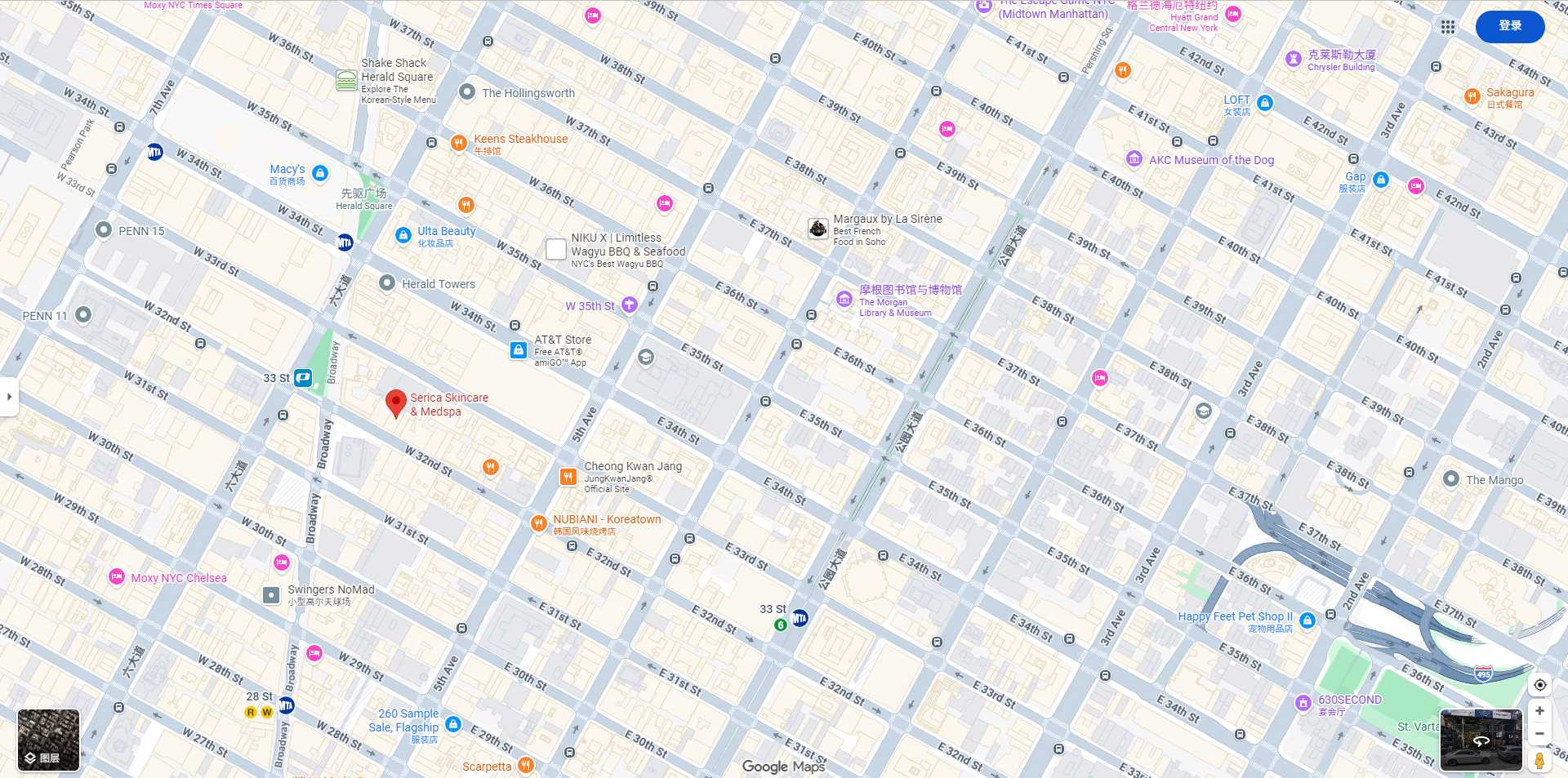
In New York, skin color assessment should not be limited to checking a box on a consultation form. Responsible institutions will combine skin analysis devices during the initial consultation to observe the distribution density of subcutaneous pigments and hidden inflammation, combined with Fitzpatrick classification for a comprehensive assessment. Clinics like Serica that focus more on accumulating data during consultations typically explain these test results and treatment parameter selections to seekers of beauty, rather than simply saying 'it can be done.' This explanation process itself is a crucial moment for seekers to judge whether the other party truly understands skin color differences.
Postoperative care holds additional significance for individuals with dark skin tones. Strict sun protection and antioxidants are beneficial for light skin tones but almost mandatory for dark skin tones. This is because melanocytes in dark skin are more easily activated, so even a slight photonic stimulus, if not followed by proper sun protection, could trigger persistent pigmentation. Some doctors may advise individuals with skin Types IV and above to discontinue the use of vitamin A products a week before and after photonic projects to reduce overall epidermal stimulation. If minor pigmentation occurs postoperatively, there is no need for excessive panic, as most will gradually fade with proper care, but this process requires sufficient patience.
In New York, diversity in skin color is not a topic to be avoided; on the contrary, it can be an effective criterion for screening institutions. When you enter a clinic and find that they actively inquire about your sun exposure history, pigment reaction history, and are willing to adjust treatment parameters based on skin tone, it at least shows they care about individual differences. If all you get is a statement like 'everyone can do it,' it might be worth looking at a few more places.
Medical aesthetics has never been a standardized assembly line, and the variable of skin color is magnified in New York, but solutions are equally abundant. Understanding your skin type, finding institutions willing to invest in parameter adjustments, taking each step more cautiously, will bring the final results closer to expectations.