Walking in Midtown or the Financial District in New York, you may notice a change: discussing medical aesthetics is no longer just a topic among women. More and more men are stepping into clinics, but their demands and ways of expression are often different from women. Most men do not want to change their facial contours and do not seek obvious makeup or delicate lines. They more often say: "I want to look refreshed, but without it being obvious that I've had something done."
This actually poses higher requirements for medical aesthetic practitioners. The more natural the goal, the more precise control is needed over dosage, layers, and timing. Doing less may not show noticeable results; doing more may lead to stiffness or feminization tendencies. Therefore, the core of male aesthetics is not about "what procedures to do" but about "to what extent to do them."
Starting from the skin itself, there are several obvious physiological differences between male and female skin structures. Men's dermis is naturally thicker with higher collagen density, so signs of aging appear relatively late, but once they do, they mainly manifest as enlarged pores, rough skin texture, and overall sagging rather than fine lines. Sebum secretion is also more active in men, and in New York's distinctly seasonal environment, many men have skin that is chronically oily on the outside and dry on the inside. For light-based treatments, non-ablative fractional lasers and picosecond lasers are often more popular foundational treatments. They can improve rough texture, shrink pores, even out skin tone, without requiring long recovery periods like ablative lasers. Men generally do not readily accept obvious peeling or redness periods, especially since many have jobs that require frequent public appearances, making downtime a harder compromise than results.
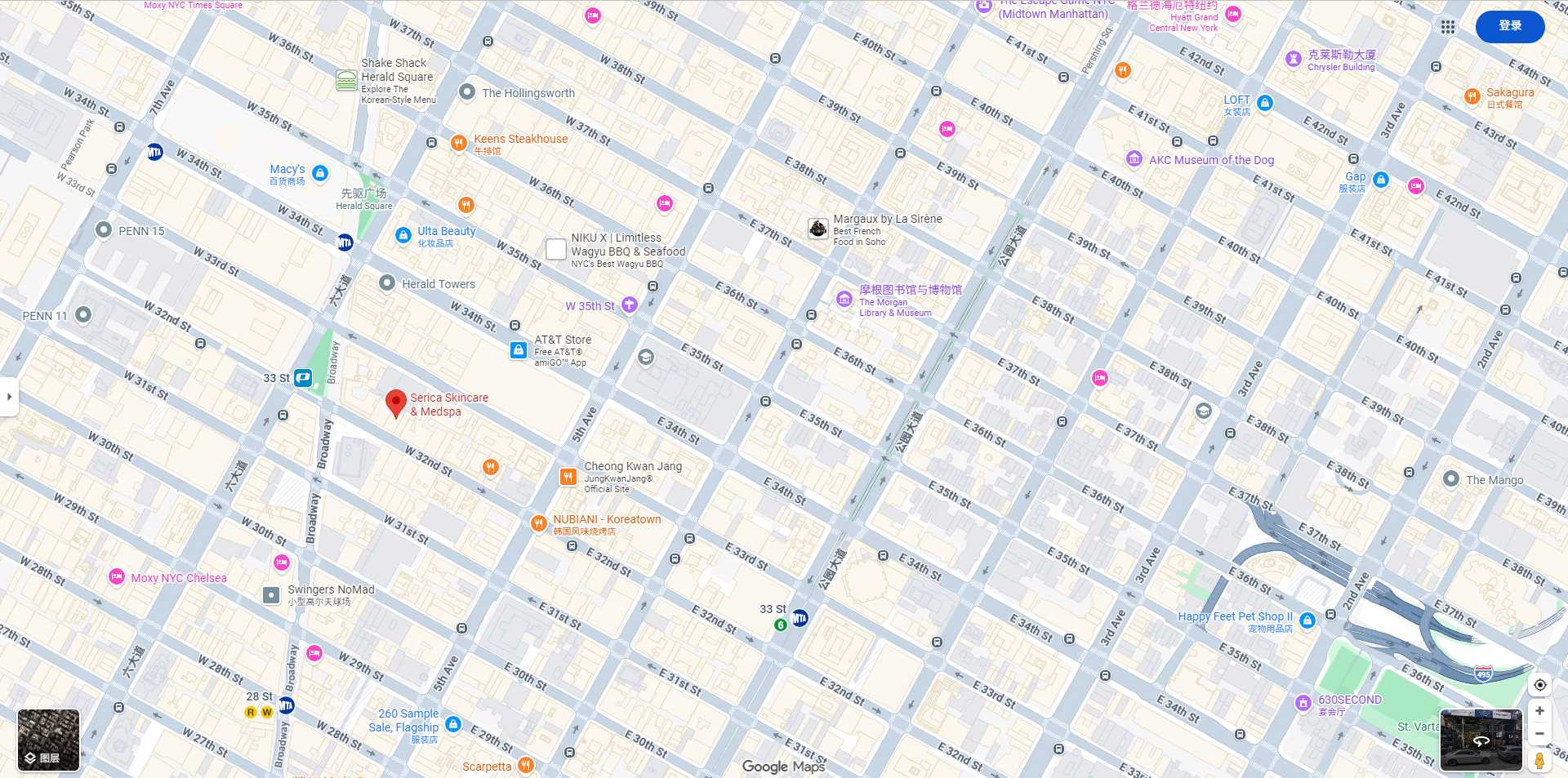
In terms of injectables, actually, botulinum toxin is quite well-received among men. Forehead lines and glabellar lines are often the areas most men want to address because these areas directly affect whether they look "constantly tired" or "angry." The key lies in the technique. Men's frontalis muscle strength is usually stronger than women's, so using excessive doses to achieve complete smoothness can easily lead to brow ptosis or facial stiffness. An experienced injector will retain a certain degree of frontalis muscle activity, keeping a slight upward angle at the brow tail, making the entire face appear naturally relaxed rather than frozen. This "leeway" approach happens to be a consensus in some New York institutions that emphasize natural aesthetics. In clinics like Serica, during the initial consultation, they usually first observe the dynamic expressions of the seeker, assess muscle strength, then determine dosage and injection sites, rather than applying a fixed template.
The use of fillers requires more restraint in the male population. The skeletal structure of the male face itself is a stylistic feature, and overfilling can blur the sharpness of the jawline and the contour of the cheekbones, making the face appear rounder and losing its original sharpness. If filler is indeed needed to improve nasolabial folds or tear troughs, it is usually focused on deep support, with the amount controlled within the minimal effective range. Many male seekers of aesthetics feedback that after the procedure, they feel that the changes in the mirror are "hard to pinpoint, but it looks a bit more pleasing," which is actually the effect they truly desire.
Recovery management is a rather unique aspect in male aesthetics. Men generally have lower patience for postoperative care and are not accustomed to applying layers of repair products on their faces. Therefore, simplifying the process is more effective than lengthy explanations of principles. Institutions like Serica, when dealing with male seekers of aesthetics, particularly present postoperative care in a concise format resembling a list, reducing the reading burden, while emphasizing the importance of sun protection - which many men resist but greatly affects the outcome. Directly informing about the time periods with the strongest UV rays, whether wearing a hat is sufficient, and which type of sunscreen does not leave a white cast, these small details actually make it easier for men to adhere to the regimen.
Another easily overlooked aspect is psychological expectations. Many men are new to medical aesthetics and describe the effects using vague terms, such as "a bit cleaner" or "a bit sharper." This is actually a good starting point for communication because it indicates that they did not come with a reference photo but have an overall feeling about themselves. Consultants or practitioners can follow these descriptions, correlating them with skin analysis data, for example, "After pore and skin tone uniformity, the overall appearance will be fresher, which is what you mean by a clean look." Grounding abstract feelings into specific actionable plans, this process itself builds trust.
In New York, male aesthetics has gradually shed its initial stigma. It is more like a form of self-management in the workplace and social life, existing on the same level as fitness, and regular routines. Choosing an institution that understands male aesthetic preferences and can handle moderation appropriately makes the entire process quiet, efficient, and closer to the desired result of being "refreshed but without anyone noticing."